

Catfish Finder: A New Era to Track Your Image Usage
Every photo you post online has a life of its own. It can be saved, copied, re-uploaded, and repurposed by someone else in seconds, often without you ever knowing. That’s exactly why catfish finder tools have become essential in 2026: they let you track exactly where your images are being used, and just as importantly, help you verify whether someone else’s photo is genuine before you trust them.
This guide explores how modern catfish search technology works, why image search catfish detection has become so important, and how to use a catfish photo search to protect yourself online.
Why Catfishing Has Become Harder to Spot
Catfishing isn’t new, but it has evolved. Early catfish accounts relied on stolen photos that a simple search could catch. Today’s fake profiles are more careful, cropping images, applying filters, or mixing several stolen photos to create a more convincing, harder-to-trace persona. That’s the gap a modern catfish finder is built to close.
A reliable catfish finder doesn’t just look for an exact copy of an image somewhere online. It’s designed to recognize the person in the photo, even when the picture itself has been altered, cropped, or paired with a different name and story.
What Is a Catfish Finder, Exactly?
A catfish finder is any tool built to verify whether a photo, usually a profile picture, genuinely belongs to the person using it. Instead of taking a profile at face value, you can run a catfish image search to check:
- Whether the same photo appears under multiple different names
- Whether the image is linked to stock photo sites or modeling portfolios
- Whether the same face shows up in completely different, unrelated photos elsewhere online
- Whether the profile picture has any real, traceable history at all
How Catfish Search Technology Actually Works
Modern catfish search tools generally rely on one of two approaches, and understanding the difference matters:
1. Traditional Image Matching
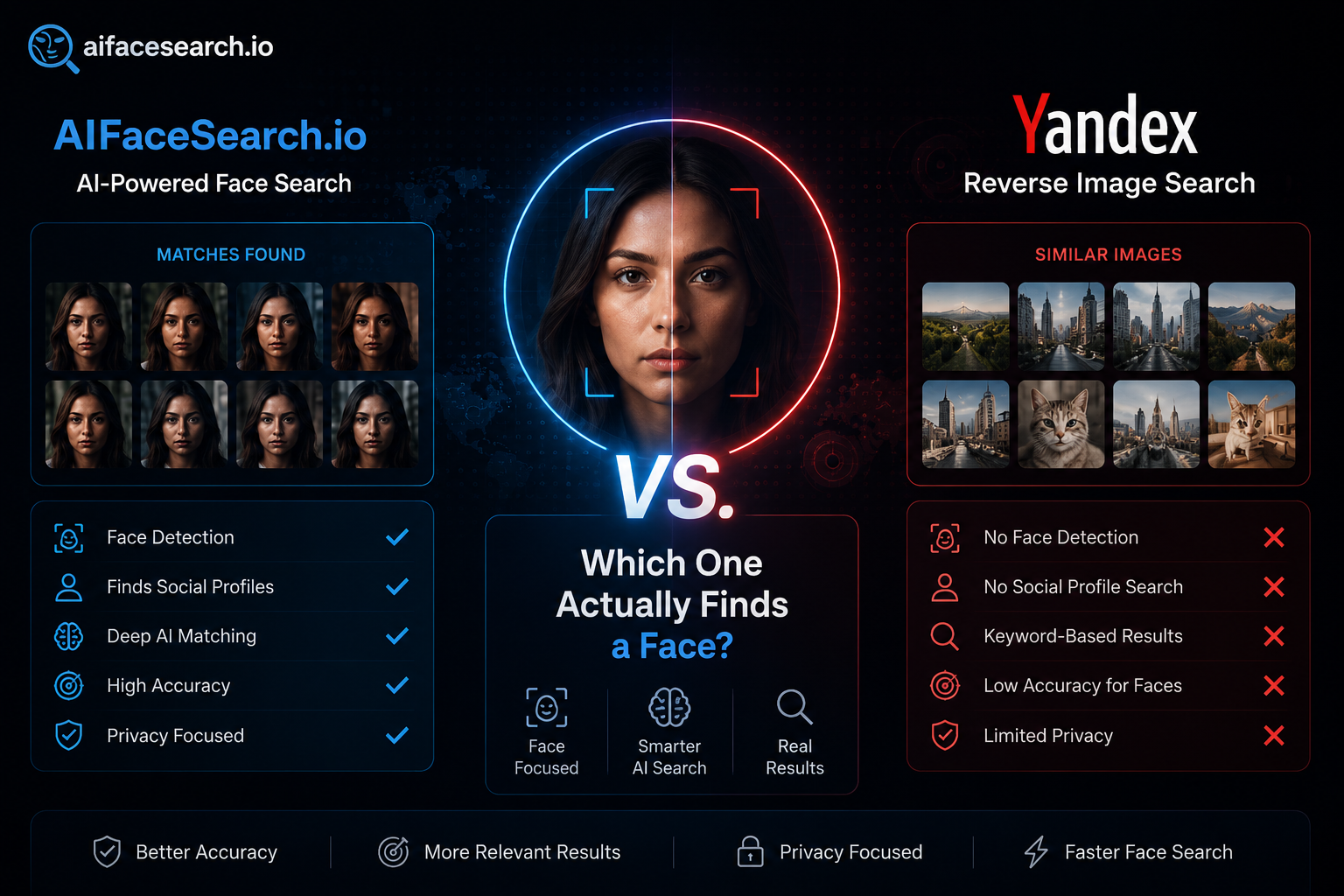
This approach compares the visual data of a photo, colors, shapes, and pixel patterns, against an index of images already online. It’s effective for catching an image search catfish case where the exact same photo has simply been reposted elsewhere.
2. AI-Powered Facial Analysis
More advanced catfish photo search platforms go a step further, using AI to map facial geometry, the distance between the eyes, jawline shape, and cheekbone structure, rather than just comparing image files. This means the tool can recognize the same person across completely different photos, even ones taken years apart or heavily edited. This is what allows a modern catfish finder to catch scammers who deliberately alter stolen photos to dodge basic detection.
Step-by-Step: How to Run a Catfish Search
- Save the profile photo you want to verify, the clearest, most front-facing image available works best
- Upload it to a catfish finder or image search tool
- Review every result, not just the top match, useful information is often further down the list
- Cross-reference any names or profiles that appear against details the person has already shared with you
- Repeat the catfish photo search with a second image if you have one, to confirm consistency across multiple results
Red Flags a Catfish Search Can Reveal
Running an image search catfish check can surface several telltale warning signs:
- The same face appearing under multiple, unrelated names
- A match to a stock photography site or advertising campaign
- No search history at all, despite the person claiming an active social life online
- Photos that appear to be AI-generated, with no real matches anywhere
If two or more of these show up during a catfish search, it’s worth treating the profile with serious caution before continuing the conversation.
Beyond Catfishing: Tracking Your Own Image Usage
A catfish finder isn’t only useful for checking other people, it’s just as valuable for monitoring your own photos. Once an image is posted publicly, it can be copied, and a catfish photo search run on your own pictures can reveal:
Try Face Search Now!


- Whether your photos are being used on a fake profile without your knowledge
- Whether your image has been used in a scam targeting someone else
- Whether your photo has been altered, filtered, or repurposed elsewhere
- Whether an old photo is still circulating on sites you no longer use
Running a periodic catfish image search on your own profile pictures is a simple habit that can catch impersonation early, before it causes real damage to your reputation or relationships.
Why This Matters More in 2026
Two trends have made catfish search technology more important than ever:
- AI-generated faces are increasingly used to build fake profiles that have zero real-world photo history, making some tools return no matches at all, a red flag in itself
- Cross-platform impersonation is more common, with stolen photos moving between dating apps, social media, and messaging platforms faster than most people can track manually
A capable catfish finder helps close both gaps by combining broad web coverage with facial-recognition accuracy, rather than relying on a single exact-match search.
Quick Checklist Before You Trust a Photo
✅ Run a catfish photo search on the profile picture
✅ Check for the same face under different names
✅ Look for stock photo or advertising matches
✅ Repeat the catfish image search with a second photo if available
✅ Watch for a complete lack of any online history
✅ Cross-check any names found against other details you already know
Final Thoughts
The tools available for verifying a photo have advanced far beyond a basic search box. A modern catfish finder combines traditional image matching with AI-powered facial analysis, making it possible to catch even carefully altered, cropped, or filtered photos that older methods would miss. Whether you’re checking a new match on a dating app or simply keeping an eye on where your own pictures end up, running a regular catfish search is one of the simplest, most effective habits you can build for staying safe online.
Discusion
ALPHANo comments yet
Be the first to share your thoughts on this article!